
Share


September 16, 2026
By Dr. Eappen
A few years ago, I published a blog post on the STAR*D study, still one of the most important pieces of research guiding how psychiatrists sequence antidepressant treatment for depression. Within this study, over the course of all four treatment levels, almost 70% of those who did not withdraw from the study became symptom-free or achieved remission.
That’s an encouraging number. But it also raised a reasonable follow-up question: what about the other 30%? If someone has worked through switching antidepressants, adding a second medication, and trying combinations like venlafaxine and mirtazapine –the pairing that performed best at STAR*D’s fourth and final treatment step – and still hasn’t reached remission, where do they go from there?
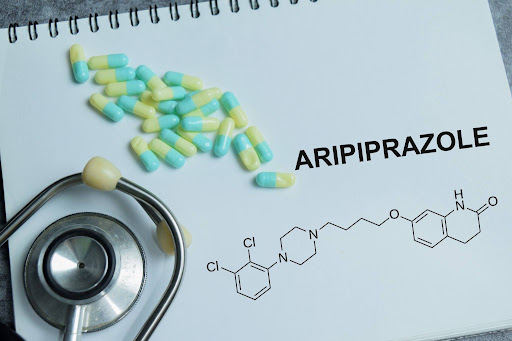
After seeing tens of thousands of patients over the past 10+ years, I have found multiple options for this “fifth treatment step” to tackle treatment-resistant depression. One of those options is the prescription of a third adjunct medicine called aripiprazole, better known by its brand name, Abilify.
A Long Track Record as an Add-On
In 2007, the FDA approved Abilify as an adjunctive (add-on) treatment to existing antidepressant therapy for adults with major depressive disorder. Prior to this, if someone had insufficiently treated depression with a medicine like citalopram (the medicine utilized in step 1 of the STAR*D study) there were no available FDA approved adjunct medications to take along with citalopram to further reduce their depressive symptoms.
If you just read my two articles on the STAR*D study, then at this point, you may be confused. Allow me to add some context:
- Enrollment for the STAR*D study began in 2000, and follow-up was completed in 2004. Abilify was not available as a treatment option in the USA until 2002.
- Abilify was initially intended to be a treatment for schizophrenia. It received FDA approval for this in 2002.
- Often, medicines that are intended to treat one condition (like schizophrenia), will serendipitously be found to have efficacy in treating completely different conditions (like major depressive disorder). This happened with Abilify. Consequently, Abilify’s manufacturer sought and obtained FDA approval for its use in treating depression in 2007.
- Given the points in #1-3 above, this explains why Abilify was not an option in any of the treatment steps of STAR*D.

Why Abilify?
The first reason: adding Abilify to an antidepressant will not adversely interact with any of the treatment options offered in the STAR*D study, as long as each of the medications are dosed and titrated appropriately.
The second reason is the evidence base behind it. A 2021 systematic review pooled data from long-term, real-world studies of aripiprazole augmentation, meaning patients who stayed on the medication for six months to a year, not just the standard six-to-eight week clinical trial window. Across these studies, roughly one-third of patients achieved remission from depression, with rates that tended to improve the longer patients stayed on treatment.
Just as encouraging, the same review found a clear dose-dependent pattern in side effects: patients on lower maintenance doses of aripiprazole, in the 2–5 mg range, had meaningfully less weight gain, akathisia (a disorder where people experience an intense and uncontrollable need to move), insomnia, and fatigue than those on higher doses, while remission rates held up just as well.
With our patients, this tracks closely with what I have seen: most patients do quite well on modest doses, and we rarely need to push the dosage beyond 7mg to get a sufficient response.

How Does Abilify Compare to Newer Options?
Since 2007, several newer second-generation antipsychotics for depression have been approved by the FDA: brexpiprazole, cariprazine, quetiapine XR, and, most recently, lumateperone. Given how much attention these newer medications get, patients regularly ask whether they should cross-taper off Abilify and onto one of the newer medications.
So far, I haven’t seen convincing evidence that any of these newer agents outperform aripiprazole if you factor in daily acceptability (ie the extent to which a patient is willing to adhere to a medication given any side effects or other burdens it may cause) alongside efficacy. In the handful of patients who have pushed to make the switch, we’ve often ended up going back to Abilify after running into either an efficacy or acceptability issue with the newer medication.
Admittedly, this is a small sample size, but a large network meta-analysis published in 2026 found something very similar. Looking across all five FDA-approved adjunctive antipsychotics, the analysis found that aripiprazole had the best overall balance of efficacy and acceptability of the group.
While lumateperone (commonly known by the brand name Caplyta) technically edged out aripiprazole on efficacy alone, it also ranked dead last on acceptability, meaning patients were considerably more likely to discontinue it due to side effects.
That pattern lines up almost exactly with what I’ve observed with a handful of patients who have tried switching to Caplyta. Some have noticed a strong initial response — occasionally even feeling better than they did on Abilify — but within a few days or weeks, the side effects tend to catch up with them, and they end up wanting to go back to what was working before.
The Takeaway
STAR*D showed us that persistence pays off: most people who stick with treatment do eventually find real relief. But it’s important to remember that the four levels studied in STAR*D were a starting point, not the end of the road. For patients who have maximized an antidepressant combination like venlafaxine and mirtazapine and still haven’t reached remission, augmenting antidepressant treatment with Abilify is one of the best-supported next steps available for treatment-resistant depression, both in the published literature and in what I’ve seen firsthand with my own patients over the years.


Email: info@eappenclinic.com
Fax: 888-972-3621
Phone: 844-632-7736
(844-6-EAPPEN)
Oak Brook
600 Enterprise Drive
Suite 220
Oak Brook, IL 60523