

Share


April 13, 2026
By Dr. Eappen
As an avid reader of the Wall Street Journal, I happened to run across an article titled “The Pill That Women Are Taking for Everything From Speeches to First Dates.” The article was about propranolol, a medication that was being described as a “magic pill” for anxiety in various settings, and how prescriptions are on the rise, particularly among young women.
I’ll admit, I was surprised. I have prescribed propranolol on occasion during my 10+ years in private practice. It was generally well tolerated and helpful for anxiety. But I have never had a patient ask about it of their own volition — so the fact that it was being hailed as a hot new trend was genuinely interesting to me.
Then, when a fellow psychiatrist asked about my experience prescribing propranolol for anxiety and about the dosages I use in practice, I figured there was enough real-world interest in this topic to warrant a blog post. So let’s dig in.
Is Propranolol Good for Anxiety?
Absolutely. I view propranolol as an effective and legitimate treatment option. That said, it’s important to understand where it fits in the broader picture of anxiety treatment.
When a new patient comes in with anxiety as their chief concern, I have roughly 40 different treatment options in mind before the visit even begins. As I gather information about their history, circumstances, and preferences, I narrow down my list, until I arrive at the two or three options best suited for that specific person.
For most patients with an anxiety disorder and no other co-occurring conditions, SSRIs (such as Zoloft, Prozac, or Lexapro) sit at the top of my list. Propranolol, by contrast, tends to start nearer the bottom — not because it doesn’t work, but because it’s not the right fit for everyone.
However, there are several clinical situations where it rises quickly toward the top of my list:
1. The patient has situational anxiety with a need for cognitive clarity.
They don’t want to take something every day, and they need to manage anxiety during times when full cognitive and physical function is essential (for example, a job interview, an exam, a major presentation).
This rules out benzodiazepines (which work like alcohol in pill form, impairing cognition and balance) and hydroxyzine (which carries a risk of sedation, similar to Benadryl). Propranolol, by contrast, manages the physical symptoms of anxiety without those drawbacks.
2. The patient has bipolar disorder.
SSRIs can trigger mood instability in patients with bipolar, making propranolol a safer alternative for anxiety management in this population.
3. We’ve reached the limits of other treatments.
If a patient is already on the maximum dose of an SSRI plus two other highly effective medications, is doing everything possible in therapy, and still needs a nudge, propranolol can serve as either a daily add-on or an as-needed medication for treatment-resistant anxiety.
4. The patient needs an “as needed” option they’ll be using more than twice a week.
Benzodiazepines carry real risks of tolerance, dependence, and withdrawal when used frequently. Propranolol doesn’t carry those same risks, which makes it a safer choice for patients who anticipate regular use.
How Does Propranolol Help with Anxiety?
To understand how propranolol works for anxiety, you need to understand a bit about the nervous system.
When you experience anxiety, your sympathetic nervous system — the “fight or flight” branch — activates. It does this by releasing chemicals called catecholamines (like epinephrine and norepinephrine), which bind to beta-adrenergic receptors throughout the body. This produces the familiar physical symptoms of anxiety: a racing heart, trembling hands, sweating, shortness of breath, and tightness in the chest.
Propranolol is a beta-adrenergic blocker (AKA a “beta blocker”). It works by competing with those stress chemicals at the receptor level, blocking their effects. As one landmark 1982 review summarized it: The blockade of beta receptors reverses sympathetically mediated tachycardia and other physical manifestations of anxiety. In plain English, propranolol dials down the body’s physical alarm response.
What makes propranolol particularly interesting is that it acts on both peripheral and central (brain-based) beta receptors. Because it’s a lipophilic compound — meaning it’s fat-soluble — it readily crosses the blood–brain barrier, unlike some other beta blockers. This dual action may explain why it helps not just with physical symptoms, but can reduce the subjective experience of anxiety as well.

What Does the Research Say?
A 2016 systematic review and meta-analysis published in the Journal of Psychopharmacology found that propranolol showed significant benefit across several anxiety-related conditions. Its anti-anxiety properties were first identified serendipitously in the early 1960s, when researchers noticed it reduced anxiety while treating tachycardia from hyperthyroidism. Since then, it has been studied for chronic anxiety, performance anxiety in musicians, exam nerves, stage fright, and more.
One study I find particularly compelling is a randomized controlled trial (RCT) involving surgical residents performing delicate eye surgery. Residents who took 40mg of propranolol one hour before the procedure showed a highly significant reduction in both anxiety and surgical tremor — without any impairment of their technical performance or increased risk to patient safety. That’s a meaningful data point: propranolol not only helped with anxiety, it helped with the physical expression of that anxiety (tremor), while leaving cognitive and motor function intact.
Similarly, research on adolescents taking standardized tests under stress found that beta blockers helped reduce stress-induced cognitive disruption — again, without sedation or impaired thinking. These studies underscore why propranolol is uniquely suited for high-stakes performance situations.
Propranolol for Anxiety: Dosage
In my practice, I approach propranolol dosing carefully and systematically, starting low and titrating up based on each patient’s response and tolerance.
I typically begin by asking a patient to “test out” a dose of 10mg or 20mg at home, on a calm day where they don’t have anything physically or mentally demanding to do, and where they can remain seated if they end up feeling faint.
If the 10mg trial is well tolerated, I’ll have them try 20mg on a different day. If that’s tolerated, we move up to 40mg. If the 40mg is well tolerated, I’ll have them try it on additional days, including anxiety-provoking ones.
Over time, patients who find the medication useful tend to fall into one of several patterns:
- Path A: 40mg as-needed, a few times per year — for major interviews, high-stakes exams, or stressful meetings.
- Path B: 40mg as-needed multiple times per week — helpful, but not to the degree that daily use feels necessary.
- Path C: 40mg every morning as a daily medication.
- Path D: They like it, but feel there’s room for more improvement.
For patients on Path D, I’ll often try 40mg in the morning and 40mg in the evening. If they find that helpful but still want more, I’ll transition them to Propranolol LA (long-acting), which releases an even amount of propranolol over 24 hours. A patient who tolerated 40mg twice daily would typically transition to Propranolol LA 80mg once daily. From there, I may add 20–40mg of immediate-release propranolol as a supplemental “as needed” dose.
If the patient tolerates and wants that as-needed dose incorporated into their regular routine, I’ll increase the Propranolol LA to 120mg. The highest total daily dose I’ve used in my practice is 160mg.
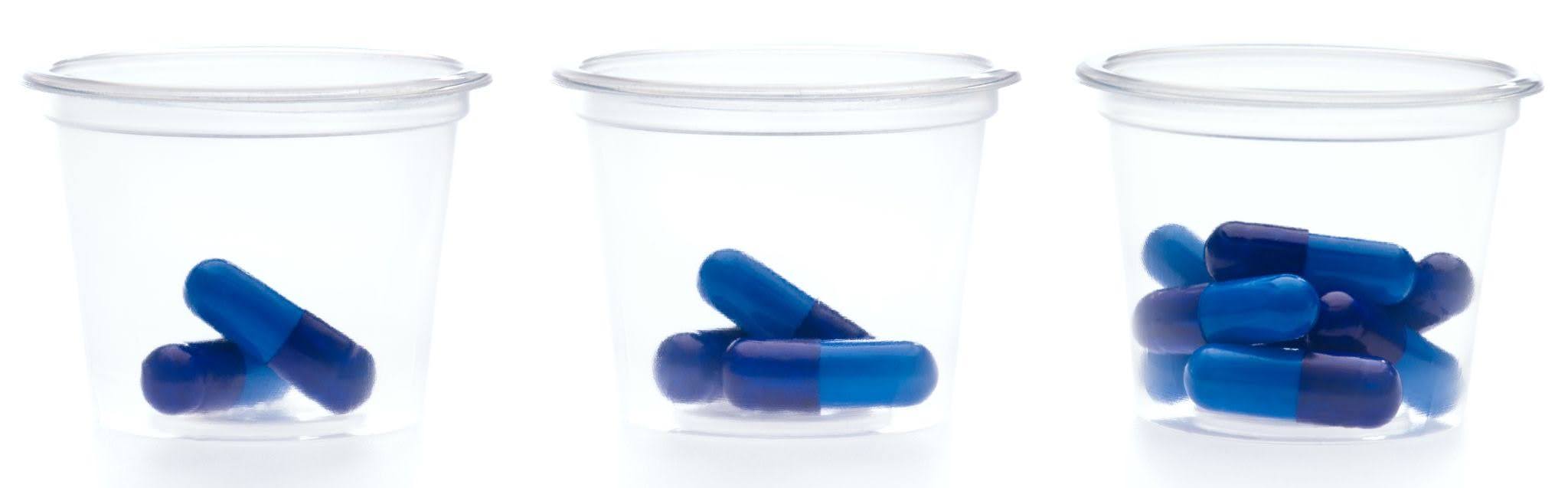
Based on my experience, here’s a rough breakdown of how patients distribute across doses:
- About 70% are satisfied with 40mg once daily or as-needed
- About 25% end up doing well at doses up to 80mg
- About 4% reach 120mg
- About 1% reach 160mg
The wide variation is a reminder that propranolol metabolism differs significantly between individuals — a given dose can produce very different blood levels depending on a person’s genetics and liver enzyme activity.
 Propranolol for Anxiety: Side Effects
Like any medication, propranolol has a side effect profile that patients and prescribers need to understand before starting treatment. The following is based on published pharmacological data.
Common Side Effects
- Bradycardia (slowed heart rate)
- Gastrointestinal issues, including abdominal pain and nausea
- Erectile dysfunction
- Wheezing or bronchospasms
- Drowsiness and fatigue
- Cold extremities (i.e. hands and feet)
Rare but Serious Side Effects
- Allergic reactions
- Insulin resistance
- Hallucinations
Contraindications: Who Should Not Take Propranolol?
Propranolol is not appropriate for everyone. Important contraindications include:
- Diabetes: Propranolol can mask the symptoms of low blood sugar (hypoglycemia), including flushing, tachycardia, sweating, and dizziness, which are the body’s warning signals that blood sugar is dropping. This makes it especially risky for people on insulin or other blood sugar-lowering medications.
- Bradycardia: Since propranolol’s primary effect is to slow heart rate, it’s contraindicated for anyone already below 60 beats per minute.
- Lung conditions (COPD, asthma, emphysema): Propranolol blocks beta-2 receptors, which normally dilate the airways. In patients with underlying lung disease, this blockade can cause the airways to constrict, potentially worsening breathing. Patients with pulmonary conditions should only use selective beta-blockers (which spare beta-2 receptors), not propranolol.
As always, it’s essential to discuss your full medical and psychiatric history with your prescriber before starting propranolol.
Frequently Asked Questions about Propranolol for Anxiety
1. What is the maximum dose of propranolol for anxiety?
Based on my clinical practice, a small number of patients have found the most benefit at doses between 160mg and 200mg daily. However, this is not the norm — the vast majority of my patients find adequate relief at much lower doses, particularly 40mg. The appropriate dose varies significantly from person to person and should always be determined in collaboration with a prescribing physician.
In the rare circumstance that I’ve prescribed up to 200mg daily, the efficacy and tolerability of this dose would be discovered over a period of about one year. The process would start with an individual experiencing benefits with 20mg-40mg, but as time went on, we’d discover they’d also experience benefits with steadily increasing doses over the months, until we reached 200mg daily (typically in the form of Propranolol LA 160mg once daily with up to 20-40mg of propranolol short release taken on top of this).
2. How quickly does propranolol work for anxiety?
Based on the two studies I referenced above — both of which administered 40mg of propranolol one hour before the anxiety-provoking event (surgical case and standardized exam, respectively) — it’s reasonable to expect propranolol to begin working within about an hour. That said, some initial or partial effects may be noticeable sooner, depending on the dose and individual.
 3. How long does propranolol last for anxiety?
I generally tell my patients to expect the effects to last somewhere between four to eight hours, though individual experiences vary considerably. A few key factors explain this range:
- Short half-life: Propranolol’s half-life is between two to six hours, meaning within that window, half the dose has already been cleared from the bloodstream.
- Dose matters: When converting from immediate-release to long-acting propranolol, the conversion is 1:1, but the short-acting formulation has to be split into three daily doses. For example, Propranolol LA 120mg (which distributes evenly over 24 hours) is equivalent to 40mg of immediate-release given every 8 hours.
- Context matters: The degree of anxiety a patient is trying to manage, the duration of the anxiety-provoking situation, and individual sensitivity to the medication all influence how long the effect feels meaningful.
4. Is 10mg of propranolol enough for anxiety?
In rare cases, yes. I’ve seen some patients find adequate relief from anxiety at 10mg — particularly those who experience side effects (such as dizziness) at higher doses and tolerate 10mg better. For these individuals, an ongoing prescription at this low dose can be useful. That said, the majority of my patients don’t find meaningful help from doses below 40mg.
Is Propranolol Right for You?
Propranolol is a medication with decades of use, a well-understood mechanism of action, and a real place in the treatment of anxiety, particularly for situational and performance-related anxiety where cognitive clarity is non-negotiable. It’s not a cure-all, and it’s not the right fit for every patient, but in the right clinical context, it can be remarkably effective.
If you’re curious about whether propranolol might be appropriate for your situation, I’d encourage you to bring it up with a psychiatrist or prescribing physician who can review your full history and help you determine whether it’s a good fit.
 If you’re experiencing symptoms of anxiety, Eappen Clinic is here to help. We work with patients to develop comprehensive, personalized treatment plans. Reach out to us to schedule an initial consultation — we’d love to help you feel well again.


Email: info@eappenclinic.com
Fax: 888-972-3621
Phone: 844-632-7736
(844-6-EAPPEN)
Oak Brook
600 Enterprise Drive
Suite 220
Oak Brook, IL 60523