
Share


December 17, 2025
By Dr. Eappen
Building on our previous discussion of physical activity and depression, this post explores how wearable devices and step tracking can provide a practical, objective approach to mental health prevention.
“I walk my dog every morning and evening, plus I’m pretty active at work. I’m definitely getting enough exercise for my mental health.”
I hear variations of this statement frequently in my practice. Patients assume they’re meeting activity recommendations based on their daily routines. But what happens when we actually measure their movement objectively? The results are often surprising—and not in a good way.
Here’s the problem: human beings are notoriously bad at estimating our own physical activity levels. What feels like “plenty of movement” often falls far short of what our brains need to ward off depression. And this miscalculation could be costing us our mental health.
The solution isn’t just moving more—it’s measuring better.
The Problem with Self-Reported Activity
Traditional approaches to tracking physical activity have relied heavily on self-reporting—asking people to estimate how much they exercise each week. However, research reveals a significant problem with this method. Studies show that agreement between self-reported and objectively measured physical activity data was only 18.3% to 32.7%.
Even more concerning, people with absolutely no objectively measured moderate-to-vigorous physical activity still self-reported accumulating 43.1 to 65.2 minutes per day of such activity.
This disconnect between perception and reality can be problematic when it comes to depression prevention. If we can’t accurately assess our current activity levels, how can we know if we’re doing enough to protect our mental health?
The Power of Objective Measurement
This is where wearable devices and step counting become game-changers. Recent groundbreaking research provides compelling evidence that objectively measured daily steps are significantly associated with depression prevention.
The Research: What We Now Know
A comprehensive systematic review and meta-analysis published in JAMA Network Open analyzed 33 studies involving 96,173 adults and found clear associations between daily step counts and depression:
Cross-sectional findings:
- 5,000+ steps/day: Associated with reduced depressive symptoms compared to fewer than 5,000 steps
- 7,500+ steps/day: Associated with 42% lower prevalence of depression
- 10,000+ steps/day: Provided additional mental health benefits
Prospective studies revealed even more encouraging results:
- 7,000+ steps/day: 31% lower risk of developing depression
- Each additional 1,000 steps/day: 9% reduction in depression risk
The beauty of these findings is their objectivity. Unlike self-reported activity, step counts provide concrete, measurable data that remove guesswork from the equation.

7,500 Steps Appears to Be the Magic Number For Mental Wellbeing
Multiple studies consistently point to 7,500 steps per day as a crucial threshold for mental health benefits. This number represents what researchers call the point where you move from “low active” to “somewhat active”.
Here’s what makes 7,500 steps particularly significant:
- Achievable Goal: It’s 25% less than the often-quoted 10,000 steps, making it more attainable for most people
- Maximum Benefit: Research shows being above the 7,500 step threshold is associated with 42% lower prevalence of depression
- Optimal Health Threshold: Studies across multiple health outcomes consistently show benefits beginning around this level
The Advantages of Step Tracking Over Traditional Exercise Monitoring
1. Accuracy and Objectivity
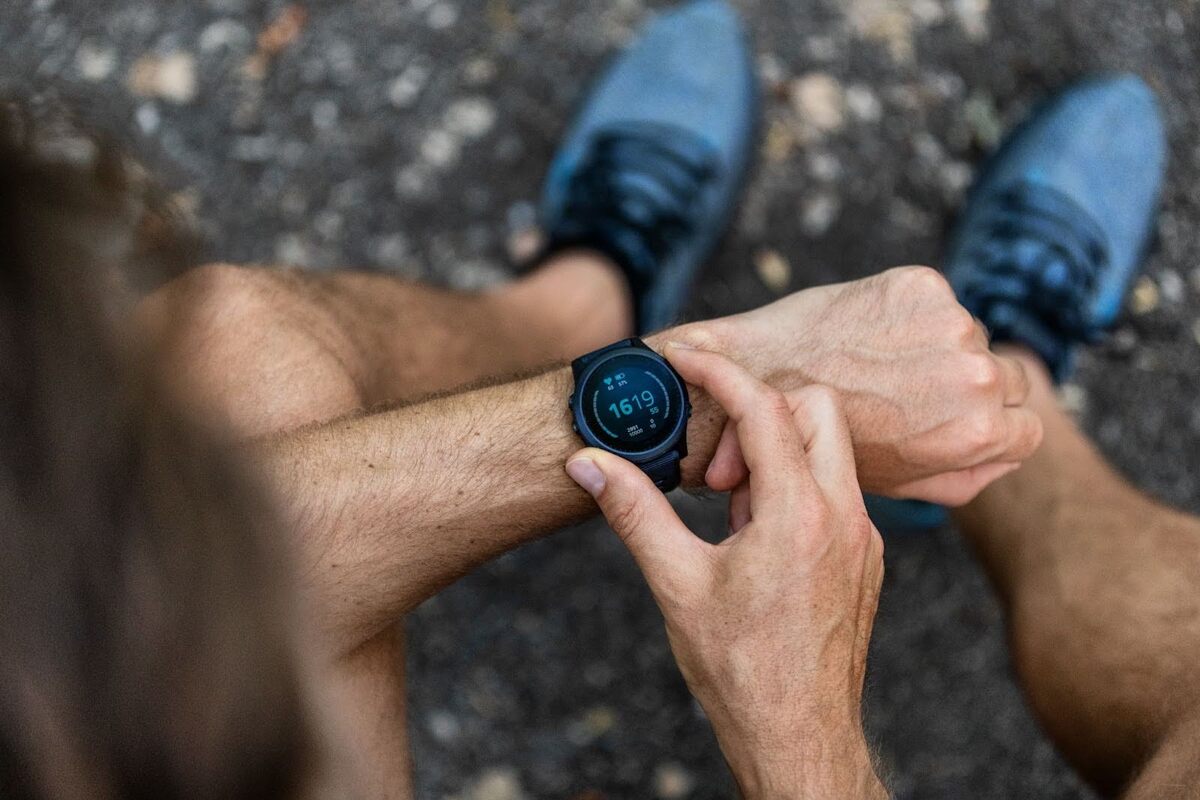
Obtaining a wearable device to monitor your daily step count is more accurate than nearly any other method of tracking physical activity. There’s no estimation, no recall bias, and no social desirability effects—just objective data.
2. Passive Monitoring
Step counters work automatically throughout the day. This approach is easy and doesn’t require you to spend mental bandwidth planning, tracking, or writing down your activity every day.
3. Captures All Movement
Unlike simply tracking planned exercise sessions, step counters capture activity throughout your entire day—walking to meetings, taking stairs, doing household chores, and all other ambulatory activities.
4. Flexible Scheduling
For people with unpredictable schedules, using a wearable device means you don’t have to plan for or around unexpected changes. This way you can gauge, at a glance, where you stand day to day and week to week, and modify the number of steps on the fly.
Making It Work: Practical Implementation
Start Where You Are
Research shows that most people benefit from incremental increases of about 2,000-2,500 steps per day. So rather than worrying about immediately hitting 7,500 steps when you’re currently taking 3,000, you can increase over time. Focus instead on gradual, sustainable increases.
Understand Your Baseline
Before setting goals, wear your device for a week to establish your current daily average. This gives you an honest starting point without judgment. Why is it important to get a baseline reading? Many patients tell me they’re “pretty active,” only to discover they’re averaging 3,500 steps per day—well below the 5,000 steps that research classifies as “sedentary.” Don’t guess; measure.
Also, you might discover you’re surprisingly active on weekdays but drop dramatically on weekends, or that certain days of the week consistently show lower activity. Understanding these patterns helps you target specific improvements.
During your baseline week, pay attention to what activities register as steps and what don’t. You’ll quickly learn that your desk job contributes very little to your daily count, while household activities like cleaning or grocery shopping add up more than expected.
During this first week, remember it’s not about performing—it’s about gathering data. Resist the urge to be “extra active” because you’re wearing a tracker. The goal is to capture your true normal, not an aspirational version of yourself.
Build Gradually and Focus on Consistency
If you’re currently taking fewer than 5,000 steps per day, consider this progression, which we have successfully implemented with many of our patients:
- Month 1: Add 1,000 steps to your daily average
- Months 2-4: Maintain this new step average and ensure you acclimate to it (to avoid risk of injuries that may occur when you suddenly increase your activity level and your body is not used to it; ie plantar fasciitis; shin splints).
- Month 5 onward: Repeat the above sequence, until reaching your optimal step count.

Beyond the Numbers: Quality Matters Too
While total daily steps are important, research also shows that at least some of these steps should be taken at moderate intensity (approximately 100 steps per minute). This means incorporating some brisk walking into your daily routine, not just slow meandering.
The optimal approach combines:
- Total daily steps: Aiming for 7,500+ steps
- Intensity: Including periods of brisk walking (where you can talk but feel slightly breathless)
- Consistency: Making this a daily habit rather than sporadic effort
Moving Forward
The evidence is clear: objective step tracking provides a powerful, practical tool for depression prevention. Unlike traditional exercise programs that require significant time blocks and planning, step-based goals can be integrated seamlessly into your existing routine.
Key takeaways:
- 7,500+ daily steps are associated with significant mental health benefits
- Wearable devices provide objective, accurate tracking that eliminates guesswork
- Small, incremental increases (1,000 steps at a time) provide meaningful benefits
- Consistency matters more than perfection
If you’re struggling with depression or want to reduce your risk, consider investing in a basic step counter or fitness tracker. It’s a small step that could make a big difference in your mental health journey.
If you’re experiencing symptoms of depression, please consult with a healthcare provider to develop a comprehensive treatment plan. Physical activity can be an excellent complement to professional care, but should not replace it for moderate to severe depression.


Email: info@eappenclinic.com
Fax: 888-972-3621
Phone: 844-632-7736
(844-6-EAPPEN)
Oak Brook
600 Enterprise Drive
Suite 220
Oak Brook, IL 60523