

Share


February 25, 2026
By Dr. Eappen
Everyone experiences anxiety from time to time. Especially after a global pandemic, it’s not surprising that you might feel a heightened sense of worry. However, generalized anxiety disorder (GAD) goes beyond experiencing fleeting moments or even long periods of worry.
Generalized anxiety disorder (GAD) is a mental health condition characterized by excessive, exaggerated anxiety about everyday life events for no obvious reason. People with symptoms of GAD tend to always expect disaster and can’t stop worrying about areas like health, money, family, or work. Anxiety can even come to dominate a person’s thinking so much that they find it hard to do routine things and maintain relationships.
Fortunately, there are treatments available for patients suffering from GAD. While in the U.S., SSRIs and SNRIs (such as Prozac, Zoloft, Lexapro, and Effexor) are used as first choice treatment options for anxiety, one underutilized medication, Pregabalin, appears to have minimal side effects and is rapidly effective for treating GAD.
In this article, I look closely at the first multicenter double-blind, placebo-controlled trial assessing the efficacy of pregabalin. This medication appears to have several advantages over other more commonly prescribed treatments. Let’s dig in!
Medication Options for Treating Anxiety
The most common and effective medications for those with GAD are the selective serotonin reuptake inhibitors (SSRIs). These medications include duloxetine (Cymbalta), escitalopram oxalate (Lexapro), fluoxetine (Prozac), paroxetine (Paxil), and sertraline (Zoloft). However, downsides of these medications include sexual side effects (decreased libido), duration of time before they are effective (can take weeks to months), and higher risk of triggering hypomanic or manic episodes in those who are wired for bipolar disorder. If you have bipolar, then we would avoid this category of medicines for treating your anxiety. However, some individuals may have the “wiring” for bipolar, but have not yet experienced an episode of mania or hypomania (an episode of either is required to diagnose bipolar). This is important, because SSRIs can trigger manic or hypomanic episodes.
If you want to avoid the SSRI’s, your doctor may temporarily prescribe a drug such as alprazolam (Xanax), chlordiazepoxide Hcl (Librium), diazepam (Valium), or lorazepam (Ativan) to give quick relief. These medications are known as benzodiazepines (or more commonly, “benzos” or “tranquilizers”). These medicines work for practically anyone with anxiety, and they work quickly. However, they work no differently on the brain and body than alcohol does. So, taking a benzodiazepine provides a similar effect to consuming a drink of alcohol. Consequently, they are not meant to be used long term.
This leaves a huge gap in treatment options that do not have the downside of benzodiazepines, but are also fast acting, avoid sexual side effects, and are safe to use in those who are wired for bipolar. Which magical medicine could meet these criteria? Enter pregabalin.
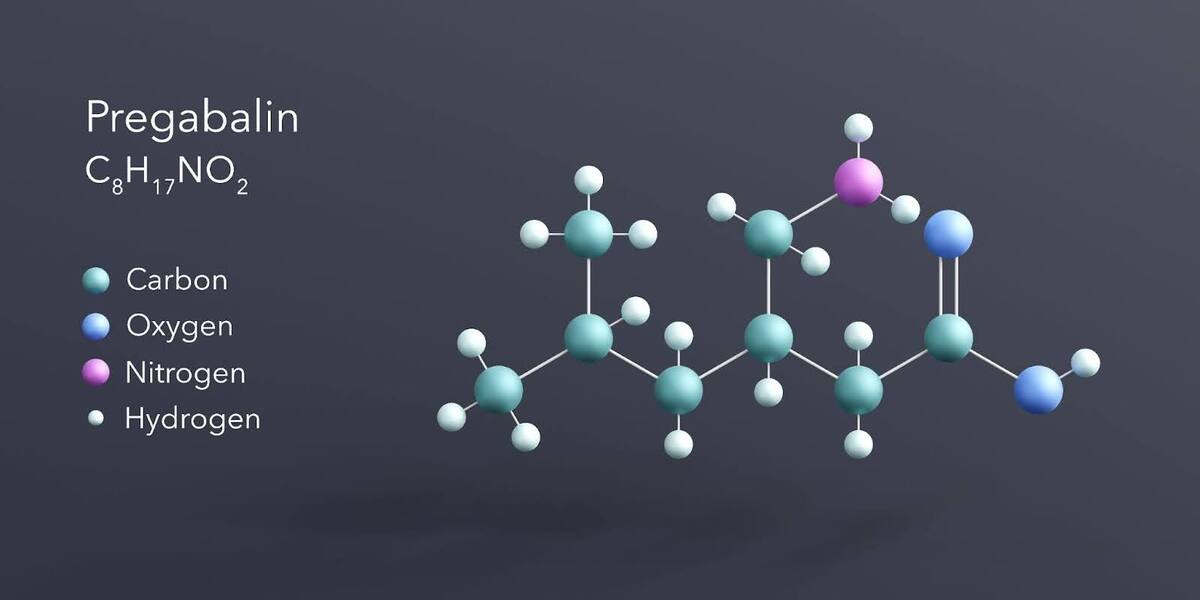
Benefits of Pregabalin for Anxiety
Pregabalin appears to fill this void. So let’s now turn to the advantages demonstrated by the first trial designed to assess the effectiveness of this underutilized anxiety medication.
1. How effective is pregabalin for anxiety?
In one of the biggest studies done on pregabalin for anxiety, it was found to be more effective than Xanax (a highly effective but highly addicting benzodiazepine), without the long term risks that come from taking benzodiazepines.
From the study: “To our knowledge, no anxiolytic agent has demonstrated equivalent or earlier onset of anxiolytic efficacy than a high-potency benzodiazepine in a double-blind, placebo-controlled, comparator trial.”
Translation: Pregabalin is a medicine that treats anxiety as quickly and effectively as Xanax, with far fewer long term consequences (ie, far less risk of dependence, tolerance, withdrawal complications, as discussed in my blog post on benzodiazepines). It is the only medicine that has been found to capture all of the upsides of Xanax, with essentially none of the downsides (which no other medicine has been found to do).
2. How long does it take pregabalin to work for anxiety?
Another advantage of taking pregabalin is that patients begin to notice its effects very quickly, i.e., within the first week of treatment. To offer some context, traditional long term anti-anxiety medication treatments (like SSRIs and SNRIs) can take several weeks before they build up in your system enough to start working.

3. Pregabalin has fewer drug-to-drug interactions.
To understand why pregabalin has this advantage over other anti-anxiety medications, we need to look at the science. Your body uses p450 enzymes to metabolize many drugs. Because of pregabalin’s lack of protein binding or activity on p450 enzymes, it won’t change the effectiveness or metabolism of other drugs patients might be taking.
This is a strong positive for pregabalin because it’s rare (at least among my patient population) to see patients who present with generalized anxiety disorder ONLY and no other condition. In other words, the likelihood that there will be one or more other untreated conditions requiring one or more separate medicines to fully treat a particular patient is high. So it’s good to know that this medicine is not likely to impact the functioning/efficacy/tolerability of other treatments.
4. Side effects of pregabalin were mild to moderate and well-tolerated.
Typical for most drugs, the highest risk of side effects with pregabalin appeared at the start of treatment, within the first 48 hours. The bulk of these side effects, most of which were mild to moderate, faded within the first two weeks after the last dosage change. Generally speaking, any side effects that do not improve over the two-week period following the last dosage change, will remain indefinitely.
Also, with a completion rate of 89%, the study clearly shows that the vast majority of patients were not adversely affected by taking the drug.
5. No rebound anxiety was detected after discontinuing Pregabalin.
This is perhaps the most important advantage that pregabalin has over other treatments. Benzodiazepines, if abruptly discontinued after being used regularly, can cause serious withdrawal symptoms. Withdrawal symptoms could include: 1) greater levels of anxiety compared to the levels experienced before the benzo was first started, 2) elevated heart rate, 3) elevated blood pressure, and 4) the risk of seizures or death.
Further, unpleasant discontinuation symptoms can occur with SSRIs and SNRIs as well – particularly if they are reduced in dosage too quickly, or abruptly discontinued without a proper taper. SSRI or SNRI withdrawal symptoms aren’t as life threatening as benzo withdrawal. However, they are quite unpleasant and can include severe depressive symptoms, anxiety, and physical symptoms resembling the flu.
Given that pregabalin doesn’t have any discontinuation symptoms when abruptly stopped at the 300-mg daily dose (nor did it when tapered over 4-7 days at 450-mg daily and 600-mg daily doses), that’s another plus for pregabalin (particularly for the 300mg daily dose).
Having said all of this, I have had patients who were very sensitive to dose changes with Pregabalin, and required extremely slow tapers when they wanted to reduce and remove the medicine, so, there are exceptions to this finding.

6. Pregabalin is affordable.
Finally, pregabalin is affordable. Because its patent ran out in December of 2018, it is available as a generic medicine now.
Overall, pregabalin is a well-tolerated, rapidly effective treatment for generalized anxiety disorder with many benefits unseen in other alternative first line treatments. It has minimal downsides and fills in the treatment gaps that SSRIs, SNRIs, and benzodiazepines struggle to cover.
So why is pregabalin so underutilized?
According to essentially every clinical practice guideline from the USA (one example is here), for the treatment of Generalized Anxiety Disorder in adults, you’ll find that the first line medication treatments recommended for this condition are SSRIs and SNRIs.
Pregabalin is often listed as one of many “second line” options that are not FDA approved, but could be chosen if the first line options are not effective, not well tolerated, or not chosen for other reasons. As a result, given its “second line, non FDA approved” place in the list of recommended treatments, it has been left behind in the USA, as an incredibly underutilized medication for GAD.
However, pregabalin is not considered a second line treatment outside the U.S. The World Federation of Societies of Biological Psychiatry (an international organization composed of 62 national societies of biological psychiatry, and renowned as a world authority on biological psychiatry) lists pregabalin amongst the SSRIs and SNRIs as a first line medicine option for GAD.
Further, the EMA (Europe’s equivalent of the United States’ FDA) approved pregabalin as a first line treatment for generalized anxiety disorder in 2006, whereas the FDA rejected the drug as a treatment for GAD in 2004.
These findings indicate that it might be time for regulatory agencies, authors of clinical practice guidelines, and clinicians in the United States to consider elevating Pregabalin – a highly effective anti-anxiety medication – from its second tier status, to a potential first line treatment option alongside the SSRIs and SNRIs.

If you or someone you love is struggling with the symptoms of anxiety, it’s important to know that you have options. Contact our clinic and one of our supportive staff members will assist with scheduling an initial consultation.


Email: info@eappenclinic.com
Fax: 888-972-3621
Phone: 844-632-7736
(844-6-EAPPEN)
Oak Brook
600 Enterprise Drive
Suite 220
Oak Brook, IL 60523